Denis Dedieu

Le travail de Denis Dedieu est résolument post- internet. Il ancre sa grammaire dans l’ensemble des référents visuels de la culture internet avec laquelle il a grandi. À l’image des creepy pasta, ces oeuvres hybrides et collectives en ligne qui mettent en doute le réel, il s’agit de questionner les espaces du souvenir vécu et ceux du souvenir collectif virtuel qu’internet génère. Denis Dedieu s’intéresse à ce que la culture populaire internet nourrit et vient combler en nous, notamment dans l’enfance incomprise et incrédule face à la violence de ses expériences : nos fantasmes, nos traumatismes, nos névroses et nos manques. L’artiste questionne les relations mémoire individuelle/ mémoire collective, réel/virtuel. Il s’agit pour cela d’explorer le sentiment de mémoire labyrinthique et de traiter le trauma comme un bug dans le jeu de l’enfance.
Denis Dedieu’s work is resolutely post-internet. He grounds his artistic language in the full range of visual references from the internet culture in which he grew up. Much like “creepy pasta”—those hybrid, collaborative online works that cast doubt on reality—his work seeks to explore the spaces of lived memory and those of the virtual collective memory generated by the internet. Denis Dedieu is interested in what internet popular culture nourishes and fulfills within us—particularly in our childhood, a time marked by incomprehension and disbelief in the face of the violence of our experiences: our fantasies, our traumas, our neuroses, and our longings. The artist explores the relationships between individual memory and collective memory, and between the real and the virtual. To do so, he explores the sense of memory as a labyrinth and treats trauma as a glitch in the game of childhood.
L’esthétique de Denis Dedieu est infusée des liminal space, cette esthétique internet 2010’ qui crée des lieux génériques et familiers, vides, sous le prisme d’une inquiétante étrangeté. L’artiste s’intéresse particulièrement au courant du dreamcore, une sous catégorie esthétique qui associe ces liminal spaces à une nostalgie douce-amer, évoque une relation ambiguë à l’enfance et la frontière brouillée entre le rêve et la réalité.
Denis Dedieu’s aesthetic is infused with “liminal spaces,” that “2010s internet aesthetic” that creates generic, familiar, empty places through the lens of a sense of uncanny strangeness. The artist is particularly interested in the “dreamcore” movement, an aesthetic subgenre that combines these liminal spaces with bittersweet nostalgia, evoking an ambiguous relationship with childhood and the blurred boundary between dream and reality.
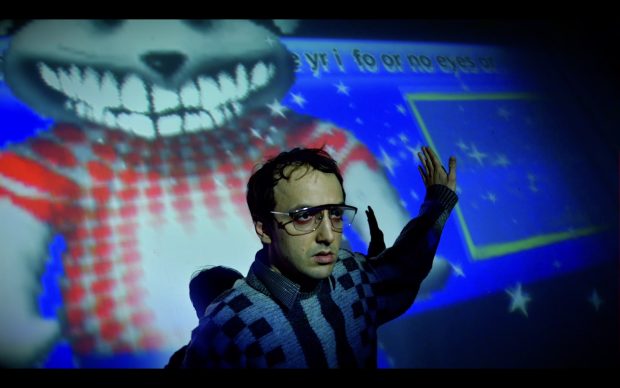
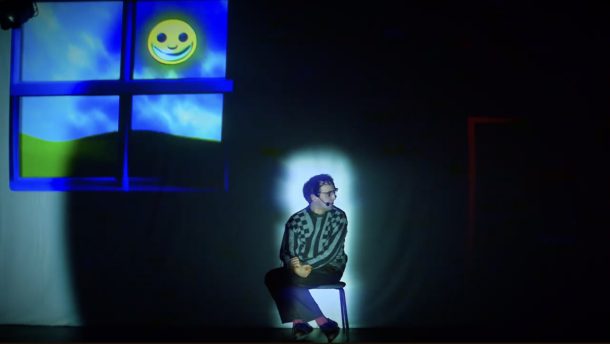
Sa première performance Feed the Feed est constituée d’une oeuvre digitale et d’une performance interactive avec une voix automatique autour des traumatismes de l’enfance, notamment la révélation de l’inceste subit par la mère de l’artiste par son père (grand-père de l’artiste). Cette oeuvre est une expérience sidérante, clouant les affects au fond des talons, en suspend du débordement que chaque trigger pourra nous générer, enveloppé dans un humour noir dérangeant qui créer tout à la fois l’adhésion et une profonde tristesse compassionnelle.
Her first performance, Feed the Feed, consists of a digital work and an interactive performance featuring a synthetic voice that explores childhood trauma, particularly the revelation that the artist’s mother was a victim of incest at the hands of her father (the artist’s grandfather). This work is a stunning experience that leaves one rooted to the spot, suspended in anticipation of the emotional outburst that each trigger might provoke, all wrapped in a disturbing black humor that evokes both empathy and a profound, compassionate sadness.
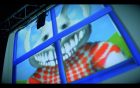
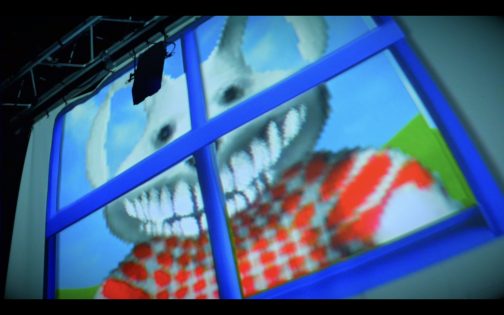
L’artiste travaille sur une seconde création, en écho à la première. CRÉMATORIUM/PISCINE À VAGUES/CHATEAUX DE CARTES souhaite profiter de la brèche ouverte par le dispositif video-performance/virtuel-réel pour engager une discussion avec les fantômes, à la manière du psychodrame. Il s’agit d’invoquer des personnages virtuels supports de projection mémorielle, issus d’une culture populaire internet partagée : les animatronic horror. Une forme d’horreur centrée sur des figures mécaniques anthropomorphes (mascottes animées, créatures de parcs d’attraction, dispositifs de divertissement automatisés) dont la promesse ludique se fissure. La spécificité des animatronic horror dans la culture internet étant leur état de veille anachronique dans différents tableaux ou pages web. Ils ne sont pas des surgissements mais des survivances, des dysfonctionnements inquiétants qui tranchent avec les personnages rassurants qu’ils sont censés incarner. Il y a là un écho certain avec les expériences de ruptures traumatiques (de confiance, de sécurité, d’amitié, d’amour) dans l’enfance.
The artist is working on a second piece that echoes the first. CREMATORIUM/WAVE POOL/HOUSES OF CARDS seeks to take advantage of the opening created by the video-performance/virtual-real format to engage in a dialogue with ghosts, in the style of psychodrama. The aim is to invoke virtual characters that serve as vessels for memory, drawn from a shared internet pop culture: animatronic horror figures. This form of horror centers on anthropomorphic mechanical figures (animated mascots, amusement park creatures, automated entertainment devices) whose promise of playfulness begins to crack. What makes animatronic horror unique in internet culture is their anachronistic state of dormancy across various web pages and images. They are not sudden appearances but rather lingering remnants—disturbing malfunctions that stand in stark contrast to the reassuring characters they are supposed to embody. There is a definite echo here of traumatic experiences of rupture—in trust, security, friendship, and love—during childhood.
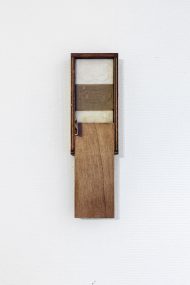
Denis Dedieu développe aussi une recherche autour de la création d’objets physiques ou numériques pensés comme des failles spatio-temporelles vers son lore* intérieur. On se délecte de cartes mentales, listes d’ingrédients de Kinder surprise « sucre, anxiété, honte, colorant, chocolat blanc-viriliste », plans de souvenirs scolaires, maquette du refoulé dans une familiarité douce-amère.
Denis Dedieu is also conducting research into the creation of physical or digital objects conceived as spatio-temporal fissures leading to his inner lore*. We revel in mental maps, lists of ingredients from Kinder Surprise—“sugar, anxiety, shame, food coloring, virile white chocolate”—maps of school memories, and a model of the repressed, all imbued with a bittersweet familiarity.